

Turn nature complexity
into business clarity
How it works
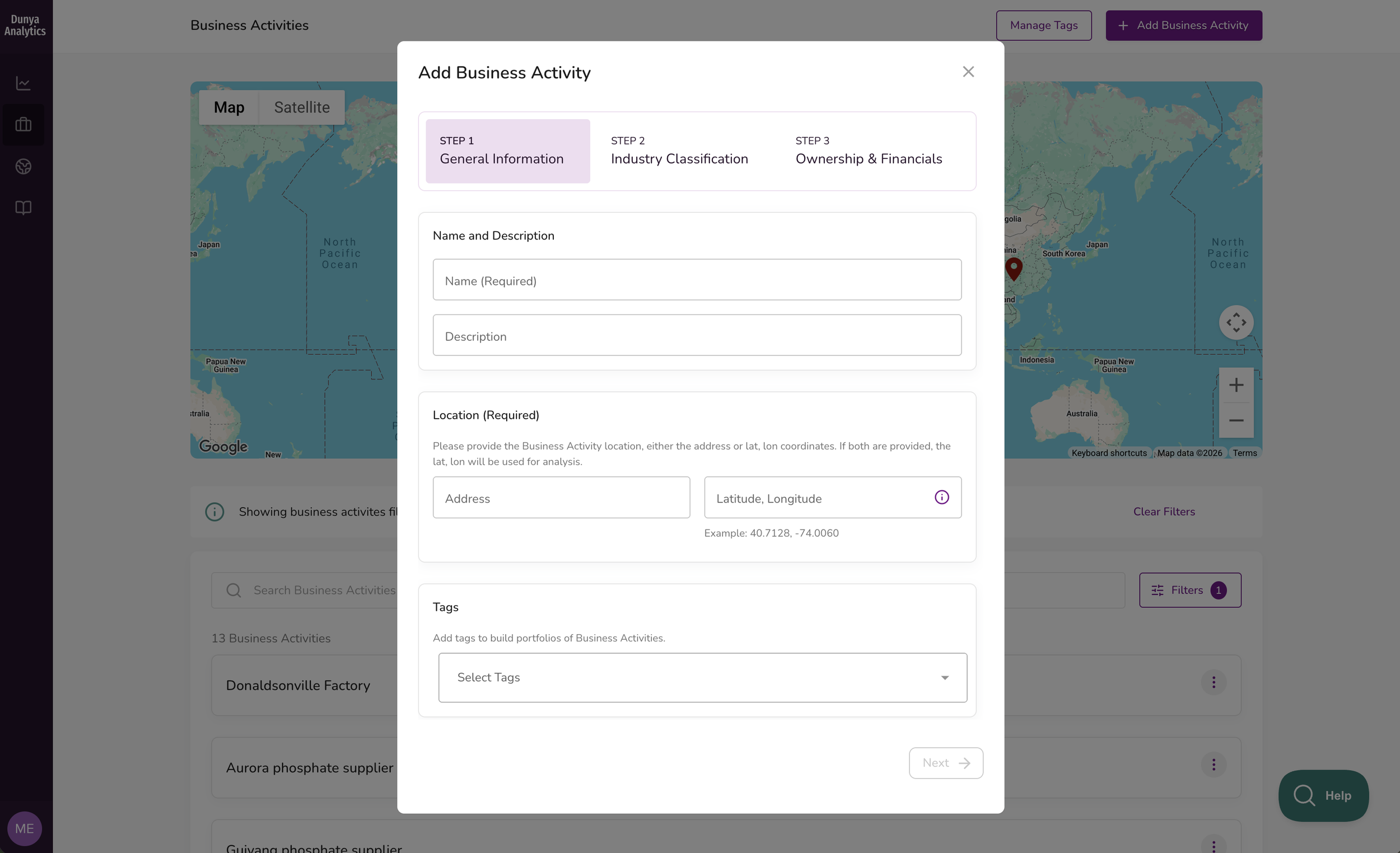
Step 1. Map Your Nature Footprint
Easily upload locations, suppliers, or portfolios. Understand your interactions with critical ecosystems and natural resources globally.
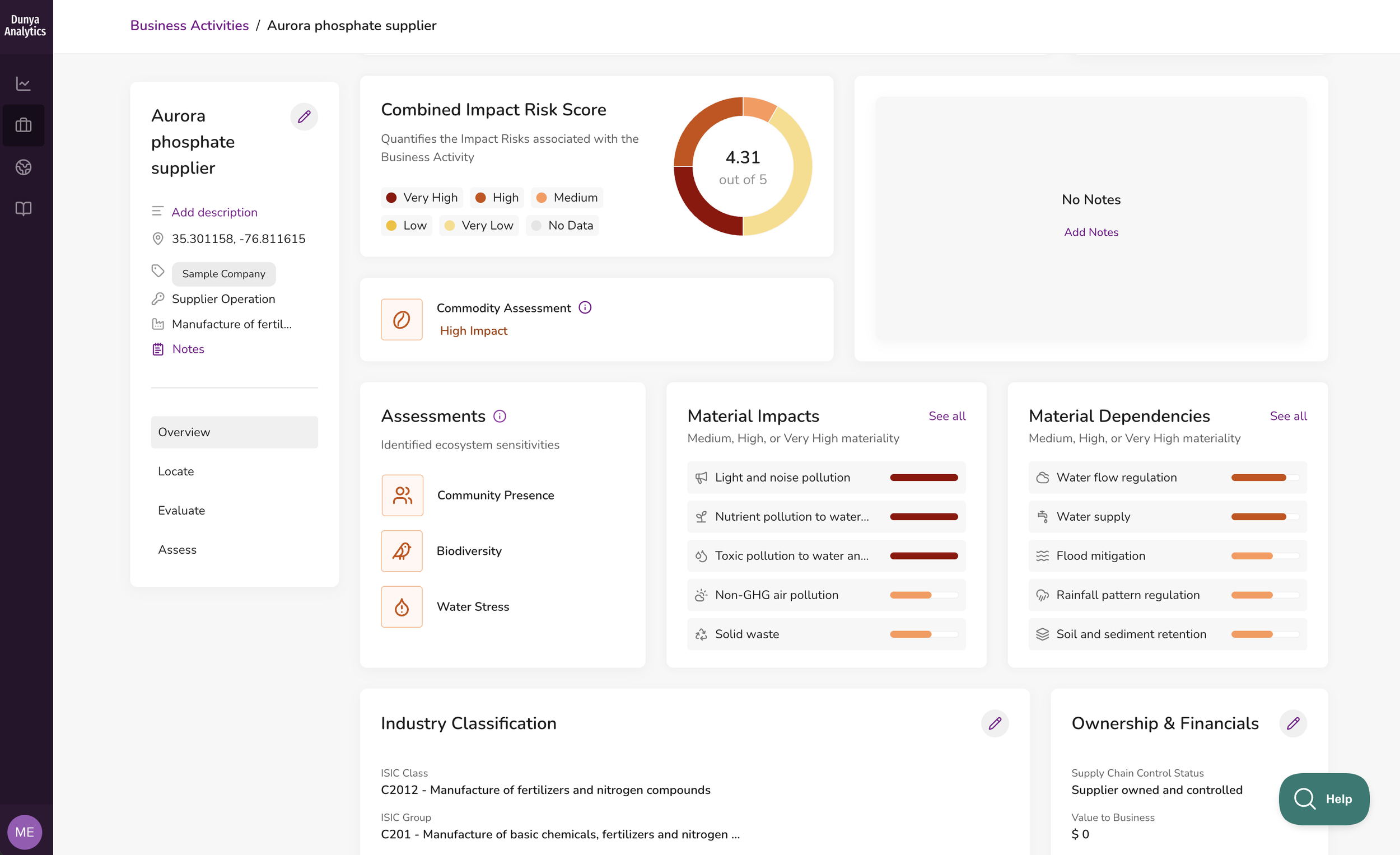
Step 2. Generate Strategic Insights
Advanced analytics pinpoint operational risks and highlight where regenerative practices create business efficiencies and financial opportunities.
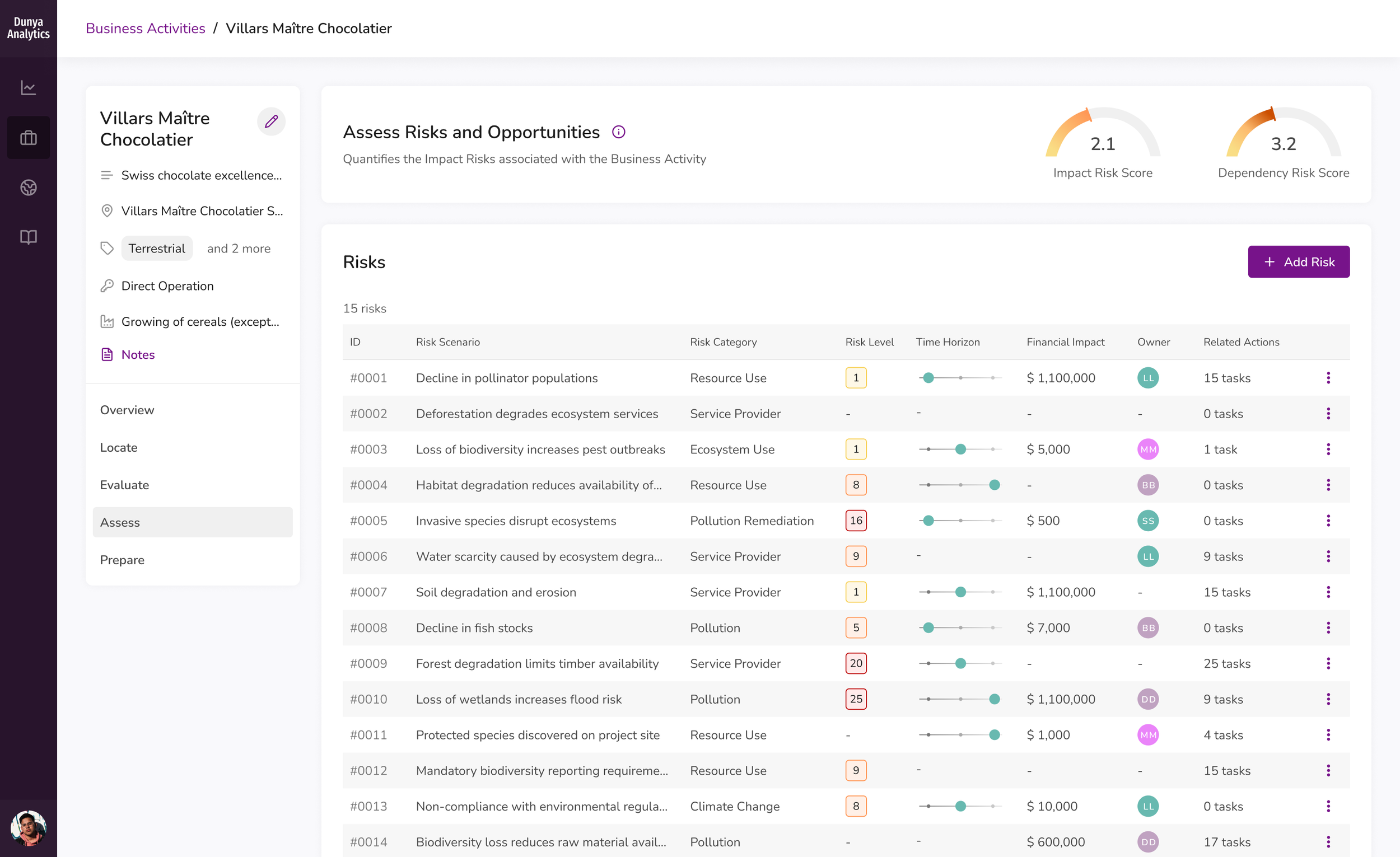
Step 3. Allocate Capital
Quantify financial risk exposure using our Imputed Nature Value framework, based on your company’s own data. Confidently allocate capital to high ROI opportunities.
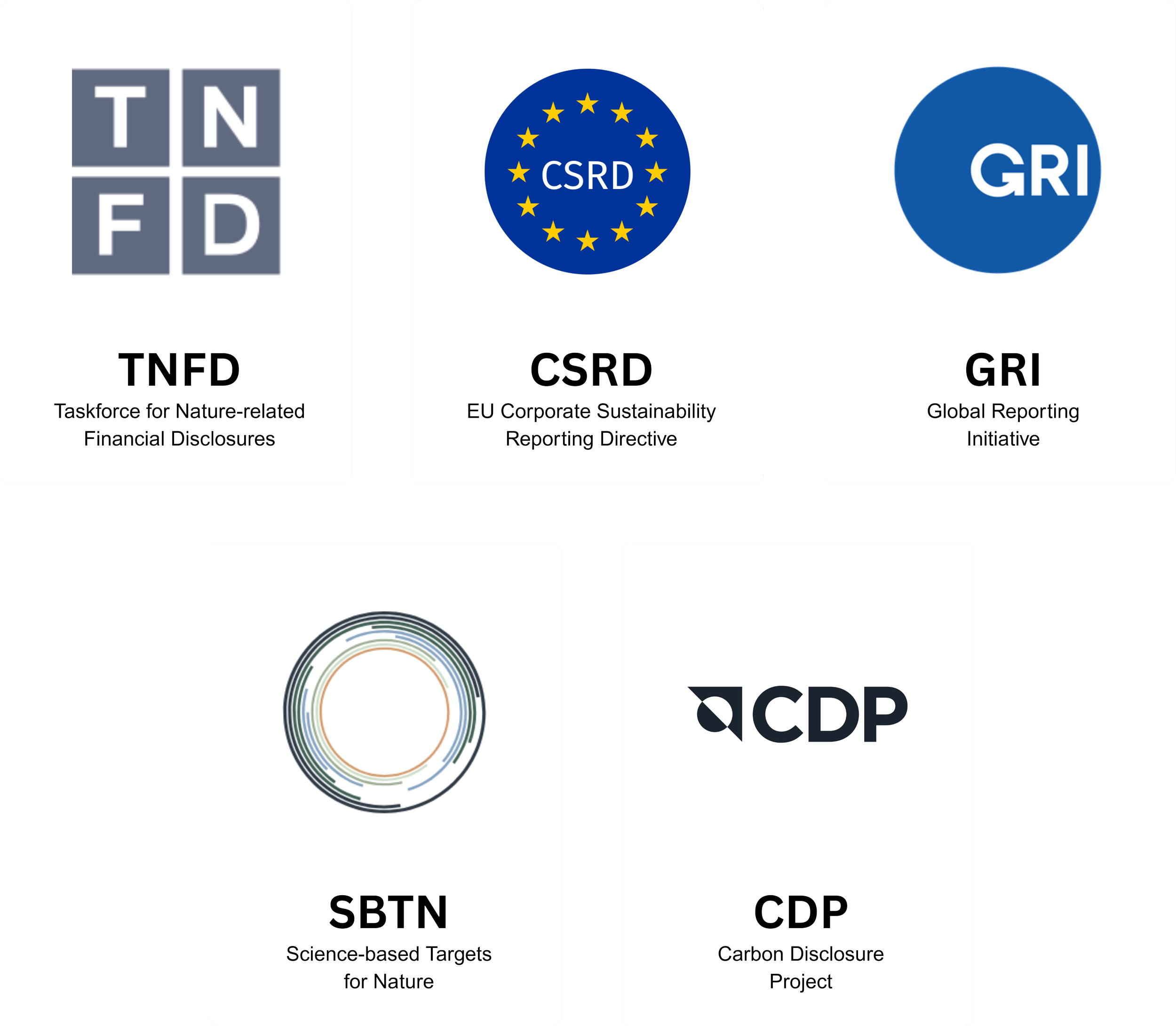
Step 4. Share Your Progress
Generate disclosure-ready reports aligned with TNFD, CSRD, and other global frameworks. Demonstrate your nature-positive journey to stakeholders with confidence.
Not sure where to start?
Download our free guide for measuring, managing, and reporting nature risk, in five actionable steps.

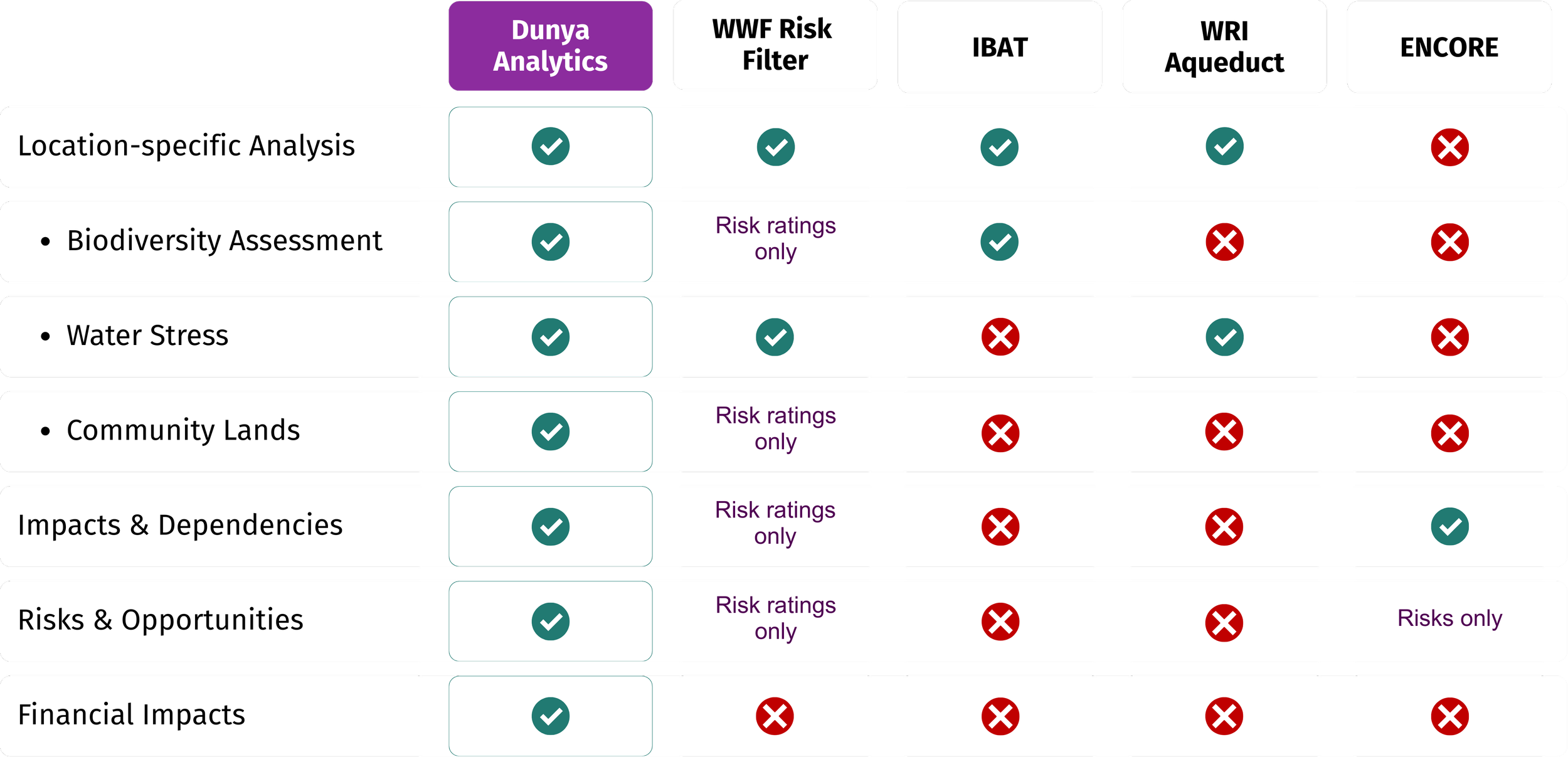
Comprehensive risk analysis in one powerful platform
How we support your disclosures
Our platform simplifies the process of assessing, reporting and managing your company’s impact on nature. Built to align seamlessly with the TNFD (LEAP) framework, it guides you step-by-step through mapping your business activities and identifying environmental risks. By simply uploading your business locations, you get an instant, clear view of how your operations interact with local ecosystems, water resources and protected areas.
The platform automatically screens your entire supply chain to highlight areas with high environmental dependencies or potential risks. It provides a user-friendly risk dashboard that translates complex scientific data into audit-ready reports. These visual insights help you prioritize your corporate sustainability actions, track your progress over time and confidently generate official reports for your public disclosures.
Our platform takes the guesswork out of corporate sustainability reporting by automating your GRI biodiversity disclosures. Instead of manually tracking complex data, you can simply upload your business locations and industrial activity types. The platform instantly determines if your operations or supply chains sit inside or near ecologically sensitive areas, measuring your proximity to protected zones, high-risk water sources and vital community resources.
Through a user-friendly risk dashboard, you can easily pinpoint exactly where your business processes have the highest impact on nature. The platform translates data into scientifically verified, audit-ready reports that show what activities are happening at each site and how they affect local ecosystems. With fully transparent methodologies, you can confidently export your data, generate public disclosures and make smarter, greener business decisions.
Our platform helps your organization achieve top marks on the CDP Biodiversity Questionnaire by automating the tracking of your environmental footprint. By simply uploading your business locations and activity types, the platform instantly identifies if any direct operations or supply chain activities sit near globally recognized zones, including protected areas, UNESCO sites and Key Biodiversity Areas.
Through our interactive risk dashboard, you can easily export detailed, audit-ready data that is perfectly structured for your CDP submissions. The platform automatically fills in critical technical details, such as country names, precise proximity and international conservation classifications (like IUCN statuses), while assessing how your specific activities might affect local wildlife. This comprehensive, scientifically-backed data ensures your reporting is flawless, helping you confidently aim for the prestigious CDP A List.
Placeholder copy. Describe here how the platform supports ESRS E4 biodiversity and ecosystem disclosures under the CSRD.
Placeholder copy. Second paragraph, matching the two-paragraph pattern used in the sections above.
Placeholder copy. Describe here how the platform supports the SBTN steps for assessing, interpreting and prioritizing nature-related impacts.
Placeholder copy. Second paragraph, matching the two-paragraph pattern used in the sections above.
How we support your disclosures
Our platform simplifies the process of assessing, reporting and managing your company’s impact on nature. Built to align seamlessly with the TNFD (LEAP) framework, it guides you step-by-step through mapping your business activities and identifying environmental risks. By simply uploading your business locations, you get an instant, clear view of how your operations interact with local ecosystems, water resources and protected areas.
The platform automatically screens your entire supply chain to highlight areas with high environmental dependencies or potential risks. It provides a user-friendly risk dashboard that translates complex scientific data into audit-ready reports. These visual insights help you prioritize your corporate sustainability actions, track your progress over time and confidently generate official reports for your public disclosures.
Our platform takes the guesswork out of corporate sustainability reporting by automating your GRI biodiversity disclosures. Instead of manually tracking complex data, you can simply upload your business locations and industrial activity types. The platform instantly determines if your operations or supply chains sit inside or near ecologically sensitive areas, measuring your proximity to protected zones, high-risk water sources and vital community resources.
Through a user-friendly risk dashboard, you can easily pinpoint exactly where your business processes have the highest impact on nature. The platform translates data into scientifically verified, audit-ready reports that show what activities are happening at each site and how they affect local ecosystems. With fully transparent methodologies, you can confidently export your data, generate public disclosures and make smarter, greener business decisions.
Our platform helps your organization achieve top marks on the CDP Biodiversity Questionnaire by automating the tracking of your environmental footprint. By simply uploading your business locations and activity types, the platform instantly identifies if any direct operations or supply chain activities sit near globally recognized zones, including protected areas, UNESCO sites and Key Biodiversity Areas.
Through our interactive risk dashboard, you can easily export detailed, audit-ready data that is perfectly structured for your CDP submissions. The platform automatically fills in critical technical details, such as country names, precise proximity and international conservation classifications (like IUCN statuses), while assessing how your specific activities might affect local wildlife. This comprehensive, scientifically-backed data ensures your reporting is flawless, helping you confidently aim for the prestigious CDP A List.