
The 2026/2027 Super El Niño is officially here and already rewriting the rules of global food sourcing
The 2026/2027 Super El Niño event is rapidly shaping up to be one of the strongest ever recorded. Beginning in June 2026, extreme weather patterns have already triggered agricultural drought across pockets of Africa, Latin America and South East Asia. Crop losses are already evident, and economists are warning that a shock to global food prices could trigger market disruptions well into 2028.
The Silent Profit Killer: Soil Moisture Deficit
El Niño is a cyclical event that severely alters world temperatures and rainfall. But much of the damage happens within the soil.
When agricultural drought hits, it can starve soil of moisture during critical growing periods such as planting, flowering, and seed development. Even if a region's total average rainfall is close to normal throughout the season, a brief dry spell during these sensitive growth stages can cause crop yields to collapse.
While the other side of El Niño brings devastating floods and waterlogged fields that reduce yields by damaging crops or delaying planting or harvest, our latest analysis focuses on the mounting threat of drought.
Why a "Super" Event Changes Everything
A typical El Niño usually bumps global food prices by roughly 5%. A "Super El Niño," however, could trigger a more severe 9% price surge across global food commodities.
Past events show just how drastically individual crop markets can react when key regions dry up:
Palm Oil: Rose 22% during the 1997/1998 event.
Sugar Cane: Surged by 140% during the 2015/2016 event.
Cocoa: Prices almost tripled during the 2024 event after West African harvests collapsed under intense drought.
Where is Your Supply Chain Most Exposed?
Using granular data from the Food and Agriculture Organization of the United Nations (FAO), our team mapped historical El Niño drought hotspots directly against modern global crop production.
The data reveal significant, simultaneous threats to major global exporters:
El Niño-related Drought Hotspots & Multi-Crop Vulnerabilities
Thailand: Facing severe, overlapping risks with a large share of its palm oil, rice and sugar cane sitting directly in historical El Niño-related drought zones.
Vietnam: Highly exposed across its agricultural landscape, putting top exports like rice, coffee and tea in jeopardy.
Côte d’Ivoire & Ghana: The heart of global chocolate sourcing shows a critical share of cocoa crops concentrated in high-exposure zones.
Unexpected Global Risks
The Americas & Europe: Wheat, barley, and maize growing regions across Russia, Ukraine, and the US also show surprising exposure. While these regions are not traditionally tied to El Niño-related droughts, unique local topography and shifting wind patterns can concentrate dry conditions over croplands.
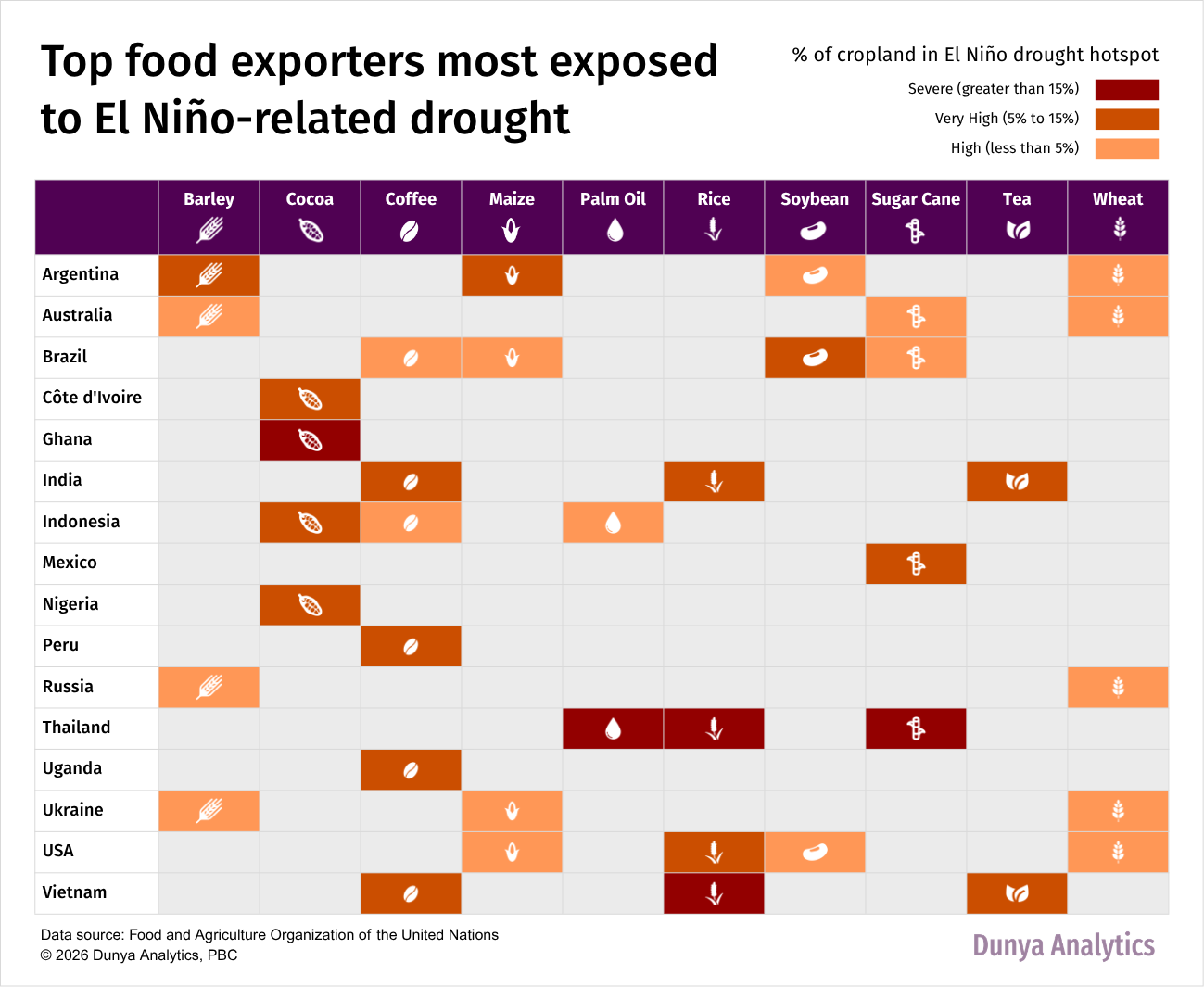
Major exporters of crop commodities. These results highlight countries with some of the greatest exposure for each commodity, based on cropland that has experienced agricultural drought during past El Niño events. Blank cells mean the country is not a major exporter of that crop and does not indicate zero exposure.
Shifting Origins is No Longer Enough
Because multiple top exporting nations are being hit at the exact same time, traditional supply-chain swapping won't save your bottom line. You must know precisely where your crops are exposed to potential drought risks.
Identify your firm’s exposure to El Niño-related agricultural drought so you can manage climate and nature risk, optimize your sustainability strategy, and protect profits. Contact us today to learn more about our El Niño analytics capabilities, covering more than 170 crops at local, regional, or national levels.
